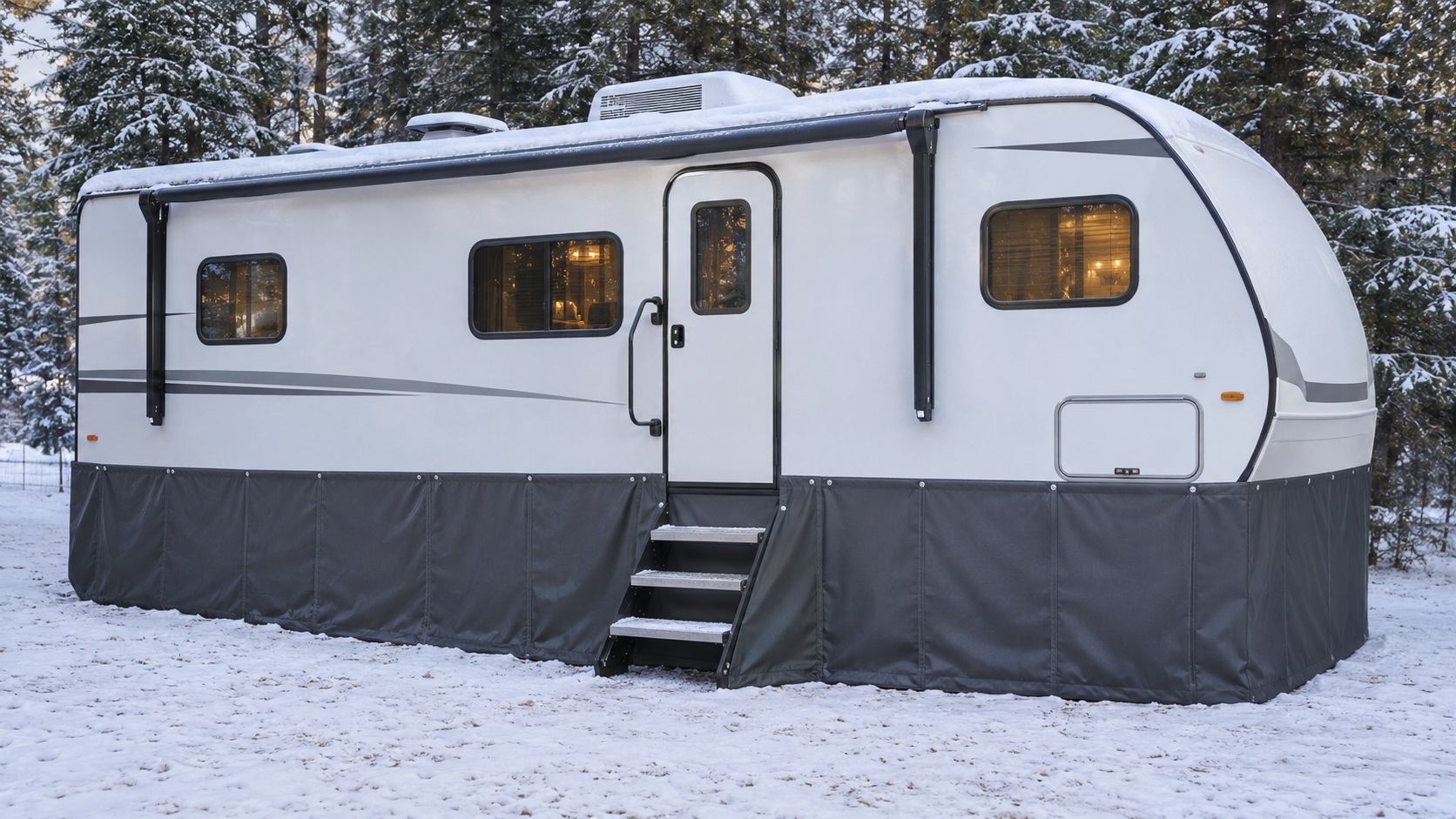
A cover is not a substitute for winterization. It is also not optional for every storage plan. The right cover can limit UV damage, keep debris off the roof, and reduce ice sitting against seals. The wrong cover can flap all winter, wear the finish, and trap moisture against the sidewalls.
That is why RV covers in New York deserve a November decision, not a January impulse buy after the first ice storm. Once snow is on the roof, fitting a cover is harder and less safe. Climbing a frozen ladder to wrestle fabric over an air conditioner is how small jobs become injuries.
When a Cover Helps
A quality cover is most useful if the RV will sit outdoors or in an open-sided building. Indoor storage already blocks sun and most precipitation. Outdoors, New York freeze-thaw cycles, wet leaves, and wind-driven snow all work on seals and roof material.
A cover can help with:
- Sun exposure on roof membranes and graphics
- Leaf stains and debris around vents
- Some protection from light snow and ice
- Keeping the unit cleaner for spring
It will not fix an unwinterized water system or a roof that already needs sealant. If water is already getting under a vent, covering the RV only hides the problem until April.
Fit and Fabric Matter More Than Price
Buy the size that matches your unit’s length and height, including air conditioners. A loose cover becomes a sail. A tight cover that rubs on corners becomes sandpaper.
Look for:
- Breathable fabric so moisture can escape
- Reinforced corners and strap points
- Access panels if you need to check the unit midwinter
- A design that will not collect ponds of water on the roof
Cheap plastic tarps are a poor stand-in. They trap condensation and tear in wind. If you cannot secure the cover, do not use one that will beat itself to pieces against the RV. Walk around after the first windy night and retighten straps. A cover that looked fine on a calm afternoon can shift once the weather turns.
Measure twice. Include the ladder, spare tire, and any cargo rack. Those extras change which size you should order.
Pair the Cover With Real Prep
Before the cover goes on:
- Winterize plumbing
- Clean the roof and inspect seals
- Check tire pressure
- Decide how batteries will be maintained
- Confirm the RV is level enough that water cannot sit in odd pockets
If you store at a facility, ask whether covers are allowed and how they want them secured. Some lots restrict them because loose covers become hazards in high wind. Ask about snow removal around the unit as well. A covered RV that sits in a drift all winter is still hard to retrieve in March.
Finding Covers and Advice at Wilkins RV
Wilkins RV stocks parts and accessories at its New York locations and can help match cover size to the unit you own. Bring the exact length and any rooftop units, so you do not guess from a generic size chart.
November is also the month to combine a cover purchase with winterization and a seal inspection. Doing those jobs together is easier than climbing on a frozen roof later. If a technician spots cracked lap sealant while the cover is still in the box, fix the seal first.
Cover the RV After You Prepare It
A cover is the last step, not the first. Finish seasonal service, then protect the exterior. Stop by Wilkins RV for the right size cover and a quick check of what else the unit needs before storage.
Wilkins RV Locations: Bath • Brewerton • Churchville • Syracuse/Cicero • Nichols • Waterloo